
Powered By



Do you ever look at your lupus test results and think they look like alphabet soup? The complex medical terms and abbreviations can leave you wondering what they mean for your lupus and overall health.
Many MyLupusTeam members — including those with systemic lupus erythematosus (SLE), the most common type of lupus — have noticed ribonucleoprotein (RNP) values appearing on their blood test results, and they’re curious about what they mean. “How many people have a positive test for RNP antibodies? And what type of lupus do you have?” asked one member.
In this article, we’ll discuss what RNP antibodies are and what a positive RNP test result means. We’ll also explore other factors contributing to a positive test result and discuss questions to ask your doctor or rheumatologist to help you understand your results.
If you’ve been living with lupus for some time, you likely know that rheumatologists use antibody tests to help make a diagnosis. Lupus is an autoimmune disease caused by your immune system attacking your healthy cells and organs. Specifically, your immune system makes proteins known as autoantibodies that recognize your own cells as foreign invaders.
One of the most important antibody tests for lupus looks for antinuclear antibodies (ANAs). About 95 percent of people with lupus test positive for ANAs. If you have a positive ANA test result, it may mean you have SLE or another rheumatic disease like these long-term autoimmune conditions:
It is also possible to have antinuclear antibodies without having an autoimmune disease at all.
RNPs play a crucial role in gene expression. Gene expression is how your cells use the instructions in your DNA to make the proteins your body needs to function.
Your genetic information is stored in your DNA. RNA is produced when cells copy information and instructions from DNA. These instructions are then used to make proteins. RNPs are made of two components — RNA and proteins that bind RNA.
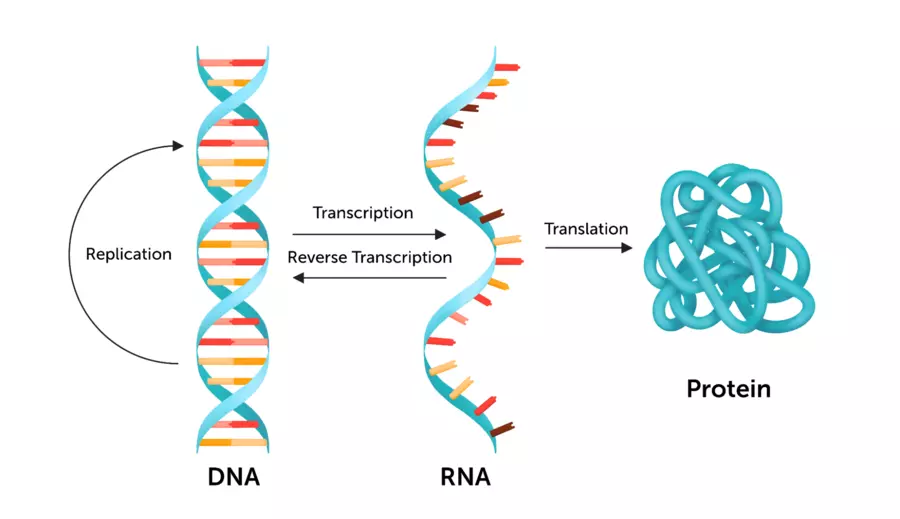
People with lupus and other autoimmune diseases can have RNP antibodies that attach to RNPs in their cells. A simplified analogy would be that the antibodies act like flags that tell your immune system to attack your cells, causing inflammation and damage.
RNP antibodies are just one of many values you may see on your lupus test results.
Currently, there isn't one single test that can diagnose lupus. Instead, your rheumatologist uses your symptoms and a combination of blood and urine tests to make a diagnosis. A positive ANA test result is a key piece of the puzzle.
Additional blood tests can be used to determine if you have lupus or a similar disease. If you have a positive anti-RNP antibody test result, it may mean you also have:
The accuracy of an RNP antibody test is measured by its sensitivity. This term refers to how well a test can correctly identify whether someone has a disease. For example, an RNP antibody test has 95 percent to 100 percent sensitivity in MCTD. This means that 95 percent to 100 percent of people who have MCTD will test positive for RNP antibodies.
On the other hand, the RNP antibody test has only 38 percent to 44 percent sensitivity in SLE. This means that only 38 percent to 44 percent of people with SLE will have RNP antibodies.
It’s important to note that sensitivity alone doesn’t tell the whole story. Sensitivity tells us how good the RNP test is at finding people who have a disease. Specificity tells us how good it is at confirming people who don’t have the disease. For RNP antibodies, the test is very sensitive for MCTD (almost everyone with MCTD will test positive), but it’s less specific because RNP antibodies can sometimes appear in lupus, scleroderma, or other conditions. That means a positive test doesn’t always mean someone has MCTD — doctors use symptoms and other tests to confirm.
MCTD belongs to a category called an overlap syndrome — you may have MCTD if you have symptoms of multiple rheumatic diseases at the same time. If you have MCTD, you may have symptoms of lupus, rheumatoid arthritis, myositis (a disease that causes inflammation of the muscles), and scleroderma.
Some MyLupusTeam members have asked others if they’ve also been diagnosed with MCTD. “My doctor teeters between diagnosing me with lupus and MCTD. I have several markers for lupus but not enough for a definitive diagnosis. I’ve never heard of MCTD. Does anyone have a similar story?”
Others replied:
Your rheumatologist may diagnose you with MCTD if you have symptoms of overlap syndrome and a positive RNP antibody test result. If you haven’t recently had an antibody test but you’ve started to notice new symptoms, it may be time to talk to your doctor.
A common symptom of MCTD is Raynaud’s disease (also called Raynaud’s phenomenon, Raynaud’s syndrome, or simply Raynaud’s). About 90 percent of people with MCTD have Raynaud’s as well. This condition causes the blood vessels in your fingers and toes to constrict (narrow) when you’re cold. You may notice your fingers turn blue or white, especially in the winter. After you get back inside or warm up, the rush of blood makes your fingers and toes swell, burn, or tingle.
Other signs of MCTD to be on the lookout for include:
Note that these symptoms vary widely, and not everyone with MCTD will experience all of them. Raynaud’s disease, swollen hands, and joint pain are the most consistently reported early signs.
Having a positive RNP antibody test may inform your prognosis (outlook) with lupus. While more research is needed, having RNP antibodies could be a risk factor for more severe lupus. A 2024 study of over 600 people with lupus found that those with RNP antibodies were less likely to be in remission or have low disease activity within six months of enrolling in the study. However, at later points in time, those with RNP antibodies achieved similar levels of remission.
Having a positive RNP antibody test result also increases your chances of having MCTD symptoms. MCTD is almost never seen in people who have a negative RNP antibody test result.
If your latest blood work showed a positive RNP test result, ask your doctor or rheumatologist about it. They can help you better understand what this information means for you and your overall health. Be sure to tell them if you’ve also been experiencing any symptoms of MCTD — this information can help your rheumatologist make a more informed diagnosis and update your treatment plan.
On MyLupusTeam, people share their experiences with lupus, get advice, and find support from others who understand.
Have you had a positive RNP test result? Let others know in the comments below.
Get updates directly to your inbox.


How do we treat numbness, and inflammation on the feet?



 Continue with Facebook
Continue with Email
Continue with Facebook
Continue with Email
Continue with Facebook
Continue with Email
Continue with Facebook
Continue with Email
Become a member to get even more





 Join
Join



 Your Privacy Choices

This is a member-feature!
Sign up for free to view article comments.
Hi, yes, I was first diagnosed with MCTD then 3 months -Lupus SLE. It never occurred to me to tell Doctors I was diagnosed with the MCTD. Raynaud’s, I had for as long as I could remember. My first… read more
We'd love to hear from you! Please share your name and email to post and read comments.
You'll also get the latest articles directly to your inbox.