
Powered By



Lupus rashes can look different depending on the type of rash and your skin tone. Sometimes, a rash is the first sign of lupus.
This article covers how the main types of lupus rashes can look on different skin tones, how sunlight can trigger a rash, and which conditions look similar.
Lupus rashes can look pink, red, purple, brown, or darker than the surrounding skin, depending on skin tone. They may be flat or raised and smooth or scaly, and they often appear on skin exposed to the sun.
Ultraviolet rays from sunlight can damage skin cells and trigger inflammation in people with lupus. This can cause new rashes to develop or existing rashes to get worse.
A butterfly rash is also called a malar rash. It’s caused by acute cutaneous lupus erythematosus, a form of lupus that affects the skin.
This type of rash spreads across both cheeks and the bridge of the nose. Typically, a malar rash spares the folds beside the nose, and it can sometimes reach the forehead or neck.
At first, the rash can look a lot like sunburn. The skin may be red and slightly swollen, with small bumps. People often mistake it for sunburn or rosacea, an inflammatory skin condition that causes facial redness. The rash may also itch, hurt, or burn.
A malar rash often looks red or pink on lighter skin and brown, black, or purple on darker skin. Texture can vary, too. The rash may be flat, raised, or scaly.
This rash typically lasts days to weeks. It can come and go, and sun exposure may bring it back. It may also be a sign of a lupus flare-up.

A malar rash, also called a butterfly rash, spans both cheeks. It can look red, purple, or brown depending on a person’s skin tone, and it can sometimes be scaly or itchy. (CC BY-NC-ND 4.0/DermNet)
Some people experience generalized acute cutaneous lupus, although it’s less common than the malar rash. This is when a rash from acute cutaneous lupus appears on areas of the body other than the face.

Although acute cutaneous lupus often causes a butterfly-shaped rash on the face, it can also cause rashes on other parts of the body. (CC BY-NC-ND 4.0/DermNet)
This rash often appears as discolored patches on sun-exposed skin, both above and below the neck and sometimes between the finger joints. It may develop during a lupus flare-up.
Discoid lupus causes coin- or disk-shaped patches, most often on the face, scalp, and ears. These patches may start as small, dry red spots. Over time, they can become thicker, raised, and scaly, sometimes making them difficult to tell apart from psoriasis, a skin condition that causes scaly patches.
On lighter skin, the patches often look pink or red, while on darker skin, they may look purple or brown. Some patches itch or feel painful, but others cause no discomfort.
As discoid lupus patches develop, their color may change. Older patches can become lighter in the center and darker around the edges. They can also leave permanent scars, especially if they aren’t treated early. When scarring affects the scalp, it may lead to permanent hair loss.
People with darker skin tones may be more likely to experience scarring and lasting changes in skin color. That’s why it’s important to have a dermatologist check new or changing patches. Early treatment may help prevent permanent skin damage.
Discoid lupus can develop in people with systemic lupus erythematosus or on its own.

Older patches of discoid lupus can become lighter in the center and darker around the edges. (CC BY-NC-ND 4.0/DermNet)

Discoid lupus rashes can be bright red or darker purple. They usually develop on the face but can also appear on a person’s ears or scalp. (CC BY-NC-ND 4.0/DermNet)
Subacute cutaneous lupus tends to appear on skin that is exposed to the sun, such as the shoulders, upper back, chest, neck, and arms. The middle of the face is usually spared, which helps set it apart from the butterfly rash.
At first, the patches may look subtle. They can be ring-shaped, sometimes with clearer skin in the center, or scaly and similar to psoriasis or ringworm.
On lighter skin, the patches often look red, and on darker skin, they may look purple or brown. A doctor may need a closer look, or possibly a skin biopsy, to tell the rash apart from other scaly rashes.
A subacute cutaneous lupus rash usually doesn’t leave scars, although the skin may stay lighter or darker for a while after it heals. The rash can return when sun exposure increases, like in the summertime.
Some cases of subacute cutaneous lupus are linked to certain medicines, such as those to lower stomach acid or treat high blood pressure. Talk to your doctor if you think your medication is causing these rashes.

Subacute cutaneous lupus can appear on sun-exposed skin, like the shoulders and back, and cause ring-shaped patches with a lighter center. (CC BY-NC-ND 4.0/DermNet)
Tumid lupus, also called lupus erythematosus tumidus, is a form of intermittent cutaneous lupus. It causes smooth, raised patches that are sometimes ring-shaped.
These patches often heal without scarring and may flare with sun exposure. They typically appear on sun-exposed areas of the skin, including the face, neck, and upper chest.
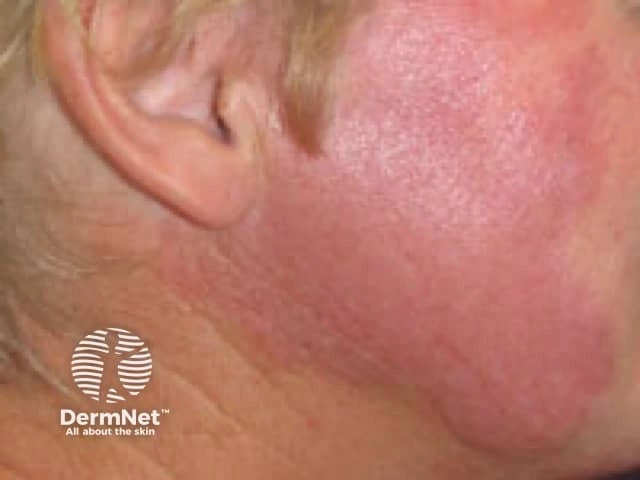
A large pink tumid lupus rash spans across the cheek and jawline. (CC BY-NC-ND 4.0/DermNet)
Many conditions can cause rashes that resemble lupus rashes, so getting an accurate diagnosis is important. Common conditions that may look similar include:
Dermatomyositis is a rare condition that can cause muscle weakness and skin rashes. Its facial rash can resemble a butterfly rash, but it usually doesn’t spare the folds beside the nose.
Rosacea often brings pimples and bumps, while seborrheic dermatitis, a condition that causes scaly, discolored skin, tends to involve the folds beside the nose.
Some medications can also cause a lupus-type rash, including certain blood pressure, acid reflux, and antifungal medicines. Allergies and skin sensitivities can cause similar rashes, too. Talk with your doctor before stopping any medicine, and tell them about every medicine, vitamin, and supplement you take.
These conditions can look alike, so appearance alone may not be enough to tell them apart. Because treatment depends on the cause, a doctor would examine your skin and, if needed, perform tests such as blood tests or a skin biopsy.
Lupus looks different from person to person, and its skin changes go well beyond what’s covered here. If you’re unsure about anything you notice, have a doctor check it out.
A rash may be the first sign of lupus, so it’s important to have it checked. Start with a primary care doctor or a dermatologist. They may refer you to a rheumatologist, a doctor who specializes in autoimmune diseases.
In the meantime, take clear, well-lit photos of the rash and note the dates so you can track changes. Write down when it started, how much sun you’ve been exposed to, and any medicines, vitamins, or supplements you take.
Using broad-spectrum sunscreen and seeking shade can also help protect exposed skin from the sun. Getting an accurate diagnosis is the first step toward finding the right treatment and protecting your skin.
Get updates directly to your inbox.





 Continue with Facebook
Continue with Email
Continue with Facebook
Continue with Email
Become a member to get even more





 Join



 Your Privacy Choices

This is a member-feature!
Sign up for free to view article comments.
We'd love to hear from you! Please share your name and email to post and read comments.
You'll also get the latest articles directly to your inbox.