
Powered By



Finding more hair than usual in your brush, shower drain, or pillowcase can be alarming, especially when you’re living with lupus. Lupus hair loss, or lupus alopecia, looks different from person to person. Your part may look wider, your edges may seem thinner, or a bald patch may not fill back in.
“I’m so discouraged by my hair loss, sometimes more than the fatigue and Raynaud’s,” shared one MyLupusTeam member.
If you’re dealing with lupus hair loss, one of your biggest questions may be whether your hair will grow back. Here’s what you need to know about the types of hair loss linked to lupus, available treatments, and ways to care for your hair and scalp.
Sign up to view the results!
 Continue with Facebook
Continue with Email
Autoimmune hair loss happens when an overactive immune system attacks the hair follicles or disrupts normal hair growth. Hair follicles are tiny pockets in your skin where each hair grows.
Several autoimmune diseases can cause hair loss, including both cutaneous lupus and systemic lupus erythematosus (SLE). Studies in different groups of people show that between 17 percent and 85 percent of people with lupus may experience hair loss or scalp lesions, which can appear in different patterns.
Several factors can cause or contribute to hair loss with lupus. These include:
Lupus is an autoimmune disease where the immune system attacks healthy body tissues. Sometimes it targets and kills hair follicles, tiny sacs in the skin from which individual hairs grow. Hair growth may resume if inflammation is treated before hair follicles are permanently damaged.
Two other types of hair loss, scarring alopecia and nonscarring alopecia, are directly linked with specific types of lupus.
Scarring alopecia is a symptom of discoid lupus erythematosus (DLE) or discoid lupus, a type of lupus that typically affects the skin alone. People with DLE can develop discoid lesions on the skin, which usually appear on light-exposed areas of the body.
Between 30 percent and 50 percent of discoid lesions usually appear on the scalp. “Now I’m having these lesions pop up on my scalp with surrounding hair loss and they’re very tender and swollen,” a MyLupusTeam member shared.
If left untreated, the lesions can scar, blocking or destroying hair follicles and leading to permanent hair loss.
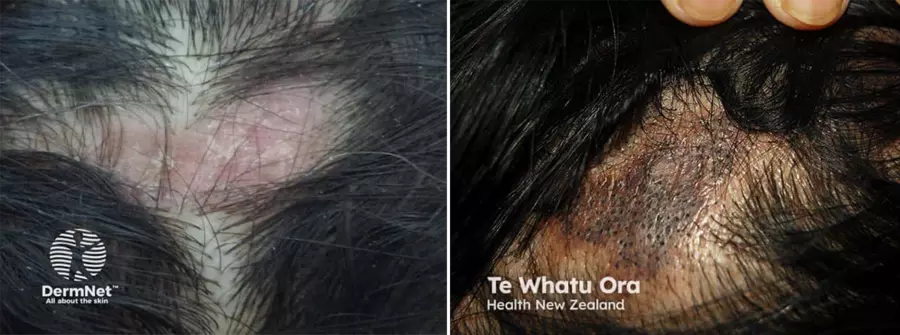
Nonscarring alopecia is associated with SLE, the most common form of lupus, which affects several different tissue types in the body. One study found that more than half of participants with SLE experienced hair loss at some point. Hair commonly becomes thin and brittle in this form of hair loss.
If the underlying cause is treated, hair growth may resume for some people with nonscarring alopecia.
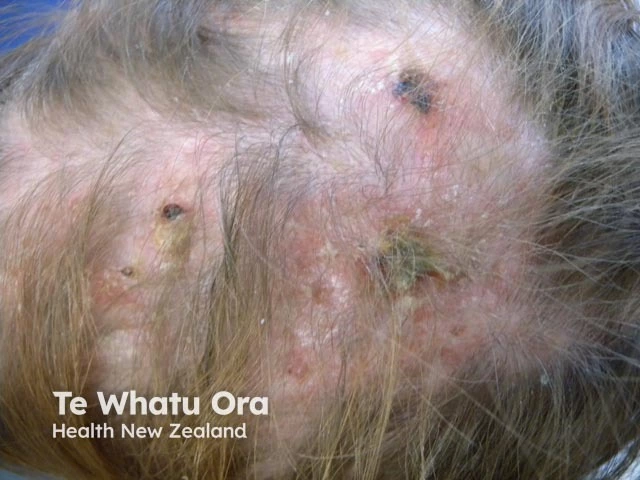
If hair loss is caused by discoid lesions, it may be treatable if addressed early, but may not be reversible once scarring is present. This doesn’t mean that discoid-lesion-related hair loss can’t be treated at all. Work with a rheumatologist and a dermatologist to help treat your hair loss.
Topical steroids and oral medications may help stop the spread of discoid lesions, so it’s important to seek treatment early.
Hair loss caused as a medication side effect may be temporary, and it’s important to treat your lupus first. Once the disease is under control, talk to your doctor about hair loss or any other side effects you experience from treatment. Never stop taking a medication without speaking to your doctor first.
The best way to treat hair loss in lupus is to address the condition itself. The following steps may help you reduce breakage, traction, or scalp irritation but can’t prevent all lupus-related hair loss or regrow scarred hair.
Take steps to prevent further damage to hair. “I don’t color or put any chemicals [on my hair], don’t blow-dry, just wash, dry naturally, and comb gently,” shared one MyLupusTeam member.
There are several ways to treat your hair gently:
Some types of lupus can cause you to be more sensitive to light. Damage to the hair and scalp from light sensitivity can lead to additional hair loss. To limit exposure to ultraviolet (UV) light:
Stress may cause hair shedding as well as lupus flares in some people. But stress hasn’t been established as a universal cause of lupus flares. There are many ways to reduce stress, including:
By managing your lupus triggers, you can reduce flare-ups that can lead to hair loss. According to MyLupusTeam members, common triggers include:
A doctor may prescribe the hormone dehydroepiandrosterone (DHEA) to address symptoms of lupus, including hair loss. But keep in mind that DHEA isn’t approved by the U.S. Food and Drug Administration (FDA) to treat lupus and isn’t a routine hair-loss treatment. Only use it when prescribed and monitored by a clinician.
Topical and injectable corticosteroids help treat inflammation and may allow hair growth when follicles aren’t scarred.
Minoxidil (Rogaine) — which is sold over the counter to stop male- and female-pattern baldness — doesn’t treat underlying lupus. But a dermatologist may sometimes recommend it along with lupus treatments in select instances.
Additionally, bear in mind that some medications for treating lupus, including steroids and immunosuppressants, can contribute to hair loss. You can talk to your doctor about possibly changing your dosage or changing to another medication.
Over-the-counter supplements, such as biotin, may help with hair loss if you have a documented deficiency or if a clinician recommends these supplements. Keep in mind that high-dose biotin can interfere with some laboratory tests, leading to misdiagnosis, so always tell your healthcare provider prior to lab testing if you’re taking it.
There are no quality research studies that support biotin’s hair growth benefits, but it is nonetheless popular. Biotin is available in supplements and also occurs naturally in foods.
As with prescription medications, speak with your doctor before you start any supplements. They can help you choose a regimen that fits your particular condition.
Get updates directly to your inbox.


My Dr. prescribed Betamethasone dipropionate to use on my scalp. I use it sparingly but it does help. My dermatologist says not to use it.
 Continue with Facebook
Continue with Email
Continue with Facebook
Continue with Email
Become a member to get even more





 Join




 Your Privacy Choices

This is a member-feature!
Sign up for free to view article comments.
I decided to go bald after years of struggling with hair loss. I must say, I feel free. With each stroke of hair that was shaved off, I felt like it was being relieved of all the negative things in my… read more
We'd love to hear from you! Please share your name and email to post and read comments.
You'll also get the latest articles directly to your inbox.